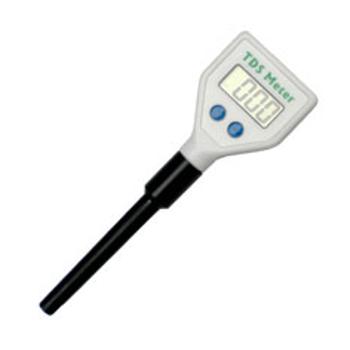
The TDS meter is the abbreviation of "Total Dissolved Solid" in English, which refers to the total amount of dissolved solids. Total dissolved solids are the collective term for inorganic salts and organic matter dissolved in water. Its main components include calcium, magnesium, sodium, potassium ions, as well as carbonate ions, bicarbonate ions, chloride ions, sulfate ions, and nitrate ions. Therefore, the TDS meter is a total dissolved solids tester. The unit of the TDS meter is ppm (i.e., mg/L), and its value is defined as a certain proportion of conductivity, generally around 0.7. The reference temperature for automatic temperature compensation of the TDS meter is typically 25°C, with a temperature coefficient of generally 2%/°C. Large screen display, equipped with a threaded interface extension electrode, suitable for direct measurement in small-diameter containers. Readings can be held, making it convenient, fast, and accurate.

 Unverified Supplier